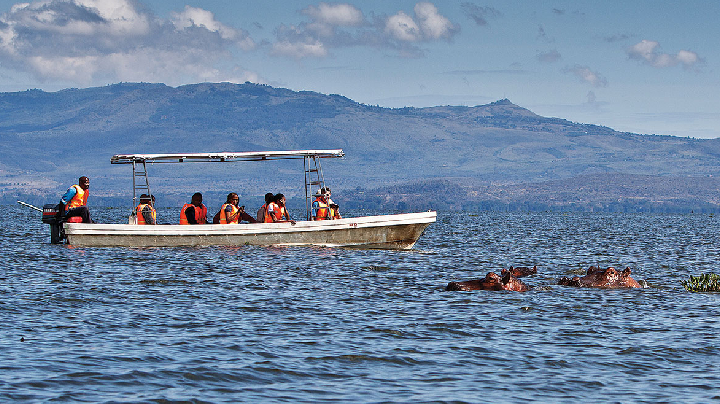
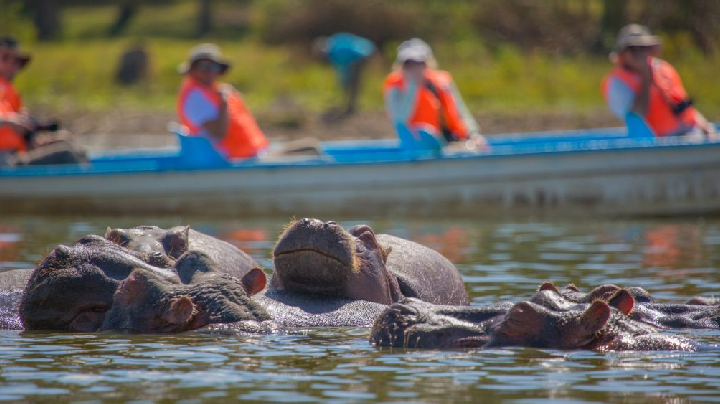
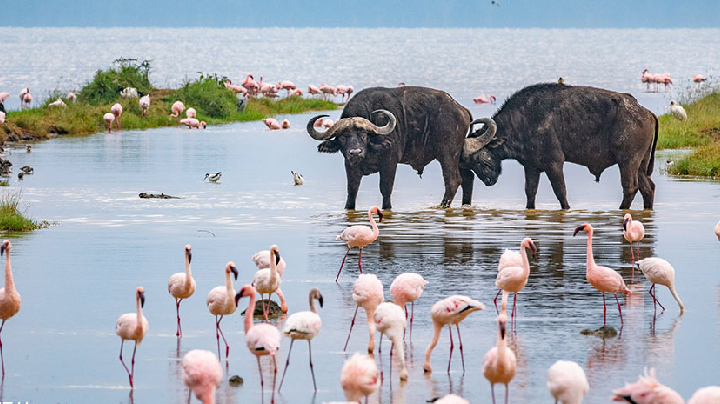
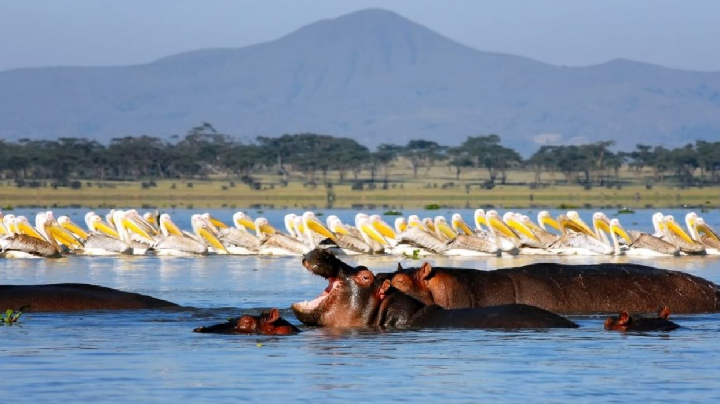
Lake Naivasha is one of the truly astonishing examples of aquatic beauty and part of the Great Rift Valley. Its One of the most famous freshwater lakes in Kenya for its amazing jaw-droppingly gorgeous scenery. The name derives from the local Maasai name ɛnaɨpɔ́sha, meaning “that which heaves,” a common Maasai word for bodies of water larger enough to have wave action when it is windy or stormy. Lake Naivasha stands out in the Kenyan rift valley by having the highest elevation at a frightening 1,884 meters. It consists of a complex yet articulate combination of volcanic rocks and sedimentary deposits. The lake is mainly fed by the Malewa and Gilgil rivers with no visible outlet; it is assumed that its outlet is an underground one. Not only is the lake impressive in terms of watery body standards as its surface area is 139 square kilometres and depth of 6M but it is also home to an extensive variety of wildlife.
Best time to visit Lake Naivasha
The best time to visit Lake Naivasha is during the dry seasons from June to October and January to February. These months offer pleasant, sunny weather with low rainfall, making them ideal for boat rides, walking safaris on Crescent Island, and hiking in Hell’s Gate National Park, as animals gather near the water and vegetation is less dense.
Dry Season (June–October, Jan–Feb): Best for wildlife viewing, hiking, and boat rides due to lower water levels and sunny weather. Birdwatching Season (Nov–Dec, April–May): The wettest months, which offer lush, green landscapes and peak birdwatching, although some roads may be challenging. Climate: Temperatures are consistently comfortable, ranging between 18-28 degrees Celsius.
Safety Note: Early mornings and late afternoons are the best times for photography and viewing, particularly for spotting wildlife near the shore.