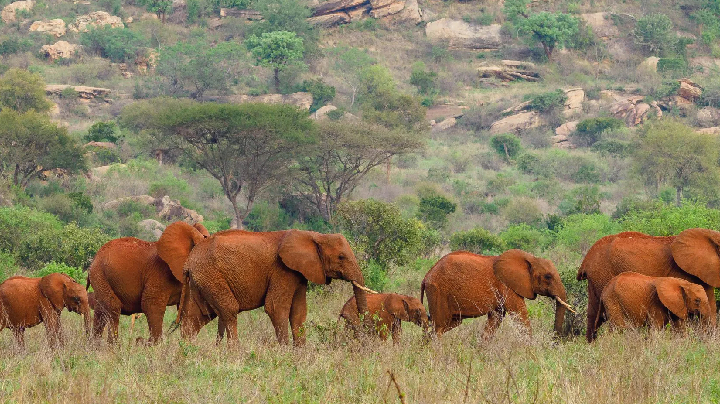
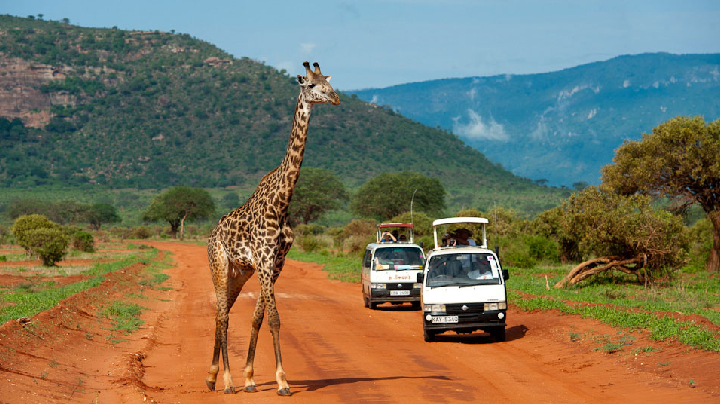
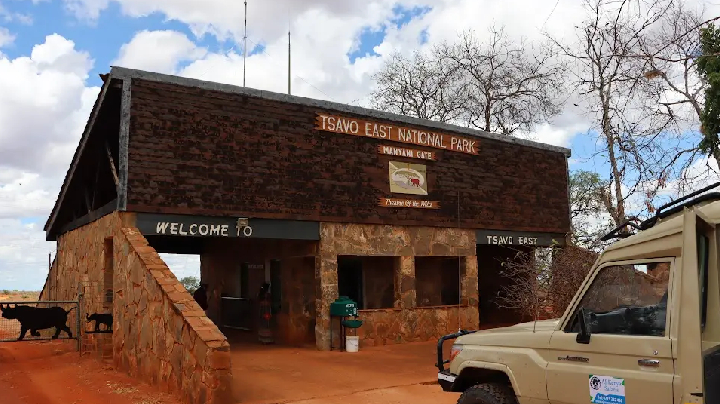
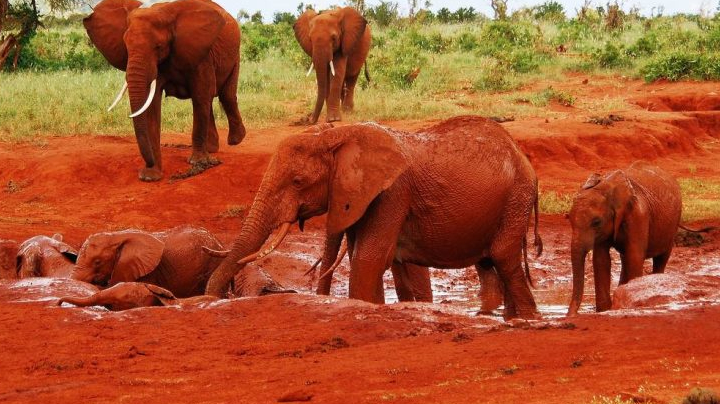
Tsavo East National Park: “Theatre of the Wild” The sight of dust-red elephant wallowing, rolling and spraying each other with the midnight blue waters of palm-shaded Galana River is one of the most evocative images in Africa. This, along with the 300 kilomtere long Yatta Plateau, the longest lava flow in the world, make for an adventure unlike any other in the Tsavo East. The park forms the largest protected area in Kenya and is home to most of the larger mammals, vast herds of dust –red elephant, Rhino, buffalo, lion, leopard, pods of hippo, crocodile, waterbucks, lesser Kudu, gerenuk and the prolific bird life features 500 recorded species.
Best time to visit Tsavo East National Park
Tsavo East National Park is best visited during the dry months from June to October and January to February, when conditions are favorable for wildlife viewing. In ‘normal’ years, during the peak of the short rains (November) and the long rains (April), conditions can be more challenging. With water and food more widely available, the animals spread out across a wider area, which makes them harder to spot.
Best Wildlife Viewing (Dry Season):June to October (coolest, peak season) and January to February (warm, excellent visibility) are ideal for spotting lions, elephants, and other wildlife.
Best for Birdwatching & Photography:November to early December and March to May (wet seasons) turn the landscape lush and green, attracting migratory birds.
Times to Avoid: The long rainy season, typically April to May, can make roads muddy and difficult to navigate, with vegetation making game viewing challenging.
Peak Season: July to September and December to February are the busiest times, requiring early booking for accommodation.
Temperature: June to August is cooler (winter), while January to March is very warm.