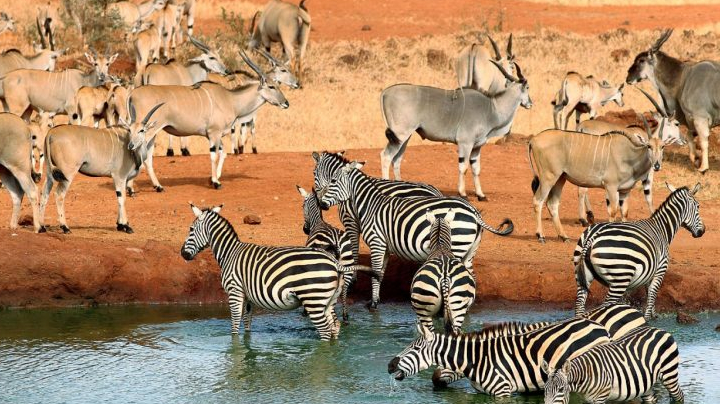
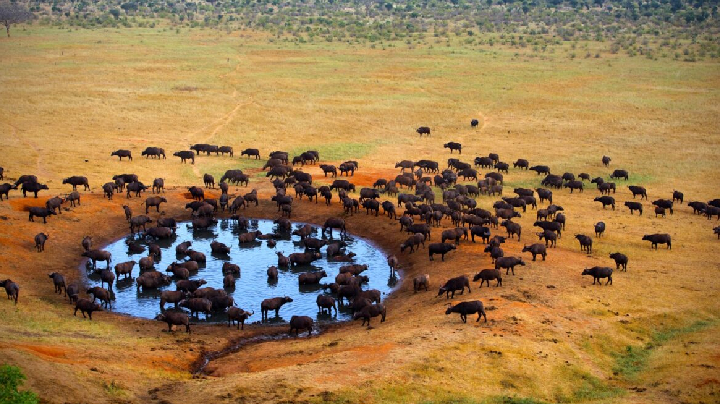
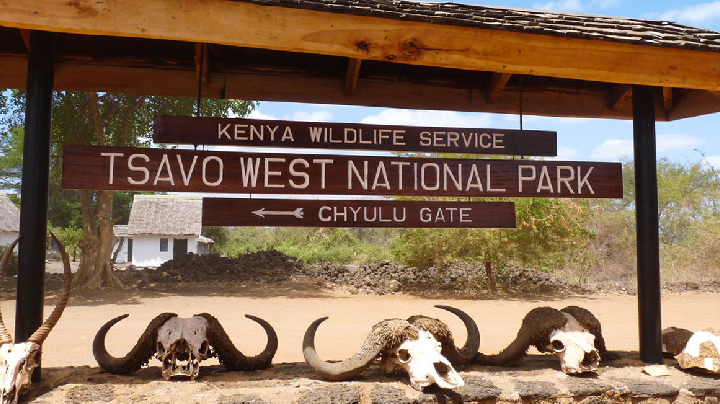
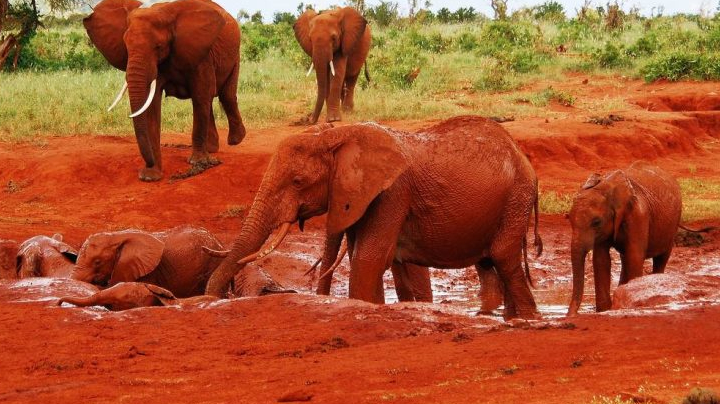
Tsavo West National Park: “Land of Lava, Springs, Man-Eaters & Magical Sunsets” From the sight of fifty million gallons of crystal clear water gushing out of from the under parched lava rock that is the Mzima Springs to the Shetani lava flows, Tsavo West is a beautiful, rugged wilderness. The savannah ecosystem comprises of open grasslands, scrublands, and Acacia woodlands, belts of riverine vegetation and rocky ridges including the Poacher’s Lookout where visitors can see the teeming herds in the plains below. Tsavo West offers some of the most magnificent game viewing in the world and attractions include elephant, rhino, Hippos, lions, cheetah, leopards, Buffalos, diverse plant and bird species including the threatened corncrake and near threatened Basra Reed Warbler.
Best time to visit Tsavo West National Park
Tsavo West National Park is best visited during the drier months, from June to October and January to February. Although the park can be visited year-round, conditions are more difficult during the peaks of the Wet season (April and November). At this time, animals tend to spread out due to the abundance of water and food, and the vegetation can become quite dense.
Key Season Details:
Best Wildlife Viewing (Dry Season): June–October and January–February are ideal for spotting animals, including lions and giraffes, as vegetation is low and water is scarce.
Birdwatching (Wet Season): November–December and March–May offer lush, green scenery, but roads can be muddy and wildlife harder to spot.
Climate: The park has a warm, semi-arid climate, making it a good choice for year-round travel, although April and November can have heavy rain.
Tips: Early mornings and late afternoons are best for game drives, regardless of the season.
Summary of Best Times:
Peak Season (June–October): Excellent wildlife viewing, busy.
Dry Season (Jan–Feb): Very good, hot, fewer crowds than mid-year.
Low Season (March–May): Best for photographers, green landscapes, and birding.