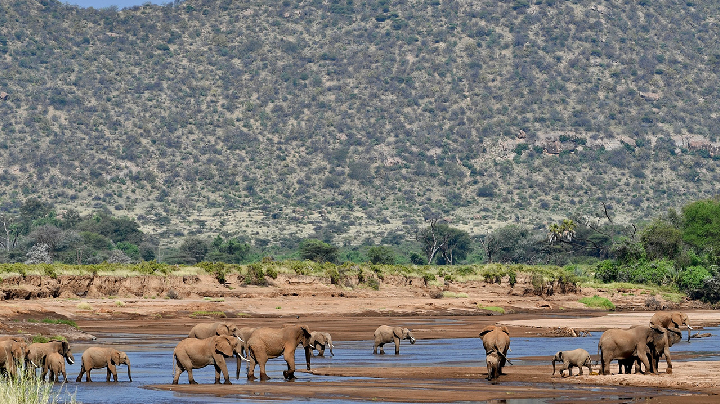
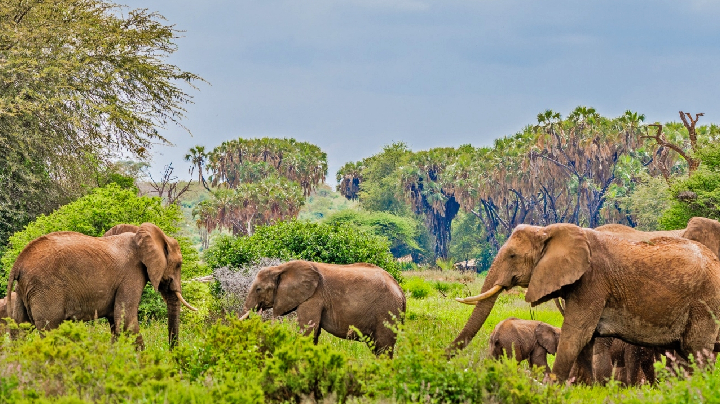
Samburu National Reserve is located in Northern Kenya and is a premier game reserve situated on the banks of the Ewaso Ng’iro river. Samburu Reserve is a unique wildlife conservation haven famous for an abundance of rare species of animals such as the Grevy Zebra, Somali Ostrich, Reticulated Giraffe, Gerenuk and the Beisa Oryx. The reserve is also home to a population of close to 900 Elephants. Large predators such as the Lion, Leopard and Cheetah are an important attraction (Kamunyak the famous Lioness that adapted a baby Oryx is a resident in the reserve).
Samburu is infact one of the better locations in Kenya to spot Leopard. Wild dog sightings are also a common attraction to this unique protected area and Birdlife is abundant with over 450 recorded species.
Best time to visit Samburu National Reserve
Samburu National Reserve can be visited year-round, but wildlife watching is usually best in the dry months from June to September and again from January to February. It is wise to avoid the peaks of the Wet season in November and April. During these months, wildlife (which has spread out anyway due to the availability of water) is more challenging to spot in the long grass.
Best Times to Visit by Activity: Best Wildlife Viewing (Dry Seasons): June–September (Long Dry) and January–February (Short Dry). Best Birdwatching: November–April, when migratory birds arrive, especially during the rainy season. Best Photography: June–October (clear, sunny skies) or post-rainy season (November/May) for lush landscapes.
Key Considerations: Weather: June–October is generally hot and dry. January–March is warm and dry. Rainy Season: April–May and November. The park becomes lush, but some roads may be difficult to navigate, and wildlife disperses, making them harder to find. Peak Season: July–October (best for high volumes of wildlife).
Note: While animals can be spotted year-round due to the permanent river, the dry months offer the most reliable, easy game viewing.