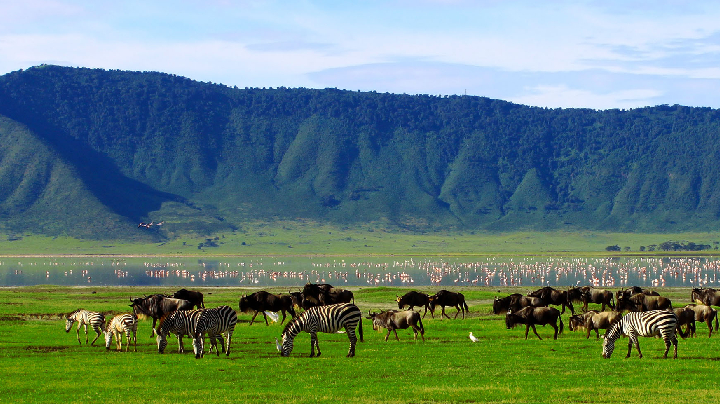
Ngorongoro crater is a UNESCO World Heritage Site known as the Eighth Wonder of the World. Deep within its immense walls is a breath-taking blue-green landscape dotted with plains, lakes and forests. It is an otherworldly “land that time forgot”, thick with massive bull elephants, rhinos, wildebeests and the highest concentration of lions in Africa. The crater, which formed when a giant volcano exploded and collapsed on itself some two to three million years ago, is 2,000 ft deep and its floor covers 100 sq mi. This incredible natural amphitheater is teeming with lions, leopards, rhino, elephants, buffalo, and many more animals.
Best time to visit Ngorongoro Crater
Wildlife viewing inside the Ngorongoro Crater is superb at all times. However, the grass on the crater floor is short in the Dry season (June to October) and this makes animal spotting easier. The scenery is lush and spectacular in the Wet season (November to May).
Best Times Breakdown: Best for Wildlife (Dry Season – June to October): Animals are easier to spot, the grass is shorter, and the weather is cooler and dry. Best for Fewer Crowds & Greenery (Wet Season – Nov to May): The landscape is vibrant, and the “short rains” (Nov-Dec) and “long rains” (March-May) bring lush scenery and migratory birds. Best for Calving & Birding (Jan to Feb): The “short dry season” offers excellent, warm weather with high bird activity and, often, the calving season in the nearby southern Serengeti, making it a great time for game viewing.
Key Considerations: Crowds: July and August are peak months, with the highest visitor numbers and accommodation prices. Weather: The crater floor is generally comfortable, but early mornings can be very cold, requiring layers. Photography: The rainy season (March-May) provides dramatic, lush backgrounds for photography, despite lower tourist numbers.